

In today’s digital-first world, businesses must leverage online strategies to connect with their audience. However, there’s often confusion about the difference between digital marketing & social media marketing. While both are crucial, they serve unique roles in a brand’s growth. Understanding these differences helps businesses craft more effective marketing strategies and allocate resources wisely.
What Is Digital Marketing?
Digital marketing is a broad term that includes all online marketing activities. It uses various digital channels to promote products, services, or brands.
Key Components of Digital Marketing
- Search Engine Optimization (SEO): Optimizing websites to rank higher on search engines like Google.
- Pay-Per-Click (PPC) Advertising: Running paid ads on search engines and websites.
- Email Marketing: Sending targeted emails to nurture leads and retain customers.
- Content Marketing: Creating valuable content (blogs, videos, infographics) to attract and engage audiences.
- Affiliate Marketing: Partnering with affiliates to promote products for a commission.
- Social Media Marketing: Using social platforms to connect with audiences.
Digital marketing is a comprehensive strategy that integrates multiple channels to achieve business goals.
What Is Social Media Marketing?
Social media marketing (SMM) is a subset of digital marketing that focuses exclusively on social media platforms. It involves creating and sharing content on platforms like Facebook, Instagram, LinkedIn, Twitter, and TikTok to engage audiences and build brand awareness.
Key Components of Social Media Marketing
- Content Creation: Posting images, videos, stories, and reels.
- Community Engagement: Responding to comments, messages, and mentions.
- Influencer Collaborations: Partnering with influencers to expand reach.
- Paid Social Ads: Running targeted ads on platforms like Facebook Ads or Instagram Ads.
- Analytics & Reporting: Tracking performance metrics (likes, shares, conversions).
SMM is platform-specific and thrives on real-time interaction and engagement.
Key Differences Between Digital Marketing & Social Media Marketing
Scope
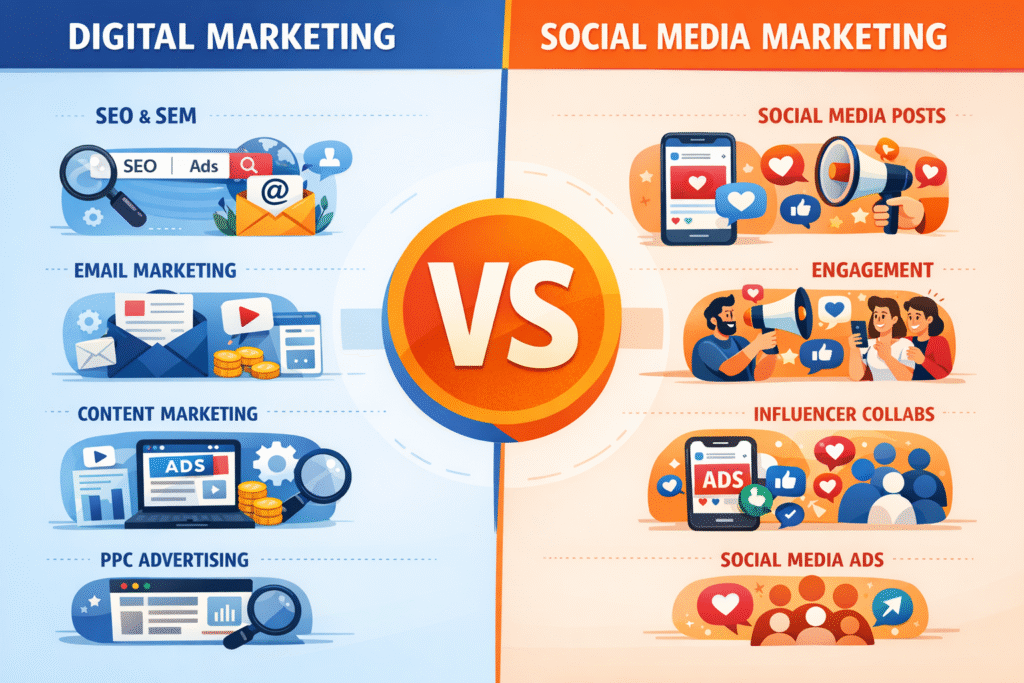
- Digital Marketing: Broad, encompassing all online marketing channels.
- Social Media Marketing: Narrow, focused only on social media platforms.
Channels Used
- Digital Marketing: SEO, PPC, email, content, affiliate marketing, and social media.
- Social Media Marketing: Facebook, Instagram, LinkedIn, Twitter, TikTok, etc.
Primary Goal
- Digital Marketing: Drives traffic, leads, and conversions.
- Social Media Marketing: Builds brand awareness and fosters engagement.
Content Types
- Digital Marketing: Blogs, ads, emails, videos, infographics.
- Social Media Marketing: Posts, stories, reels, live videos.
Measurement Metrics
- Digital Marketing: Traffic, conversion rates, ROI.
- Social Media Marketing: Likes, shares, comments, follower growth.
Why Both Are Essential for Business Growth
While digital marketing provides a holistic approach to online promotion, social media marketing offers direct engagement with audiences. Here’s why businesses need both:
- Digital Marketing Ensures Visibility: SEO and PPC help businesses rank higher on search engines, driving organic and paid traffic.
- Social Media Marketing Builds Relationships: Platforms like Instagram and LinkedIn allow brands to connect personally with customers.
- Synergy Between Both: A well-integrated strategy (e.g., promoting blog content on social media) maximizes reach and conversions.
How to Choose the Right Strategy for Your Business
When to Focus on Digital Marketing
- If your goal is lead generation and long-term growth.
- If you want to rank higher on Google and attract organic traffic.
- If you need a multi-channel approach (SEO, email, PPC).
When to Focus on Social Media Marketing
- If your audience is highly active on social platforms.
- If you want to build brand loyalty and engage directly with customers.
- If you rely on visual content (e.g., fashion, food, lifestyle brands).
FAQs
1. Is social media marketing the same as digital marketing?
No, social media marketing is a part of digital marketing. Digital marketing includes all online marketing efforts, while social media marketing focuses only on social media platforms.
2. Which is more important: digital marketing or social media marketing?
Both are important, but their relevance depends on your business goals. Digital marketing is essential for overall online visibility, while social media marketing is crucial for engagement and brand loyalty.
3. Can I succeed with only social media marketing?
While social media marketing is powerful, relying solely on it may limit your reach. Combining it with other digital marketing strategies (like SEO and email marketing) ensures a balanced and effective approach.
4. How do I measure the success of digital marketing vs. social media marketing?
- Digital Marketing Success: Track website traffic, conversion rates, and ROI.
- Social Media Marketing Success: Monitor likes, shares, comments, follower growth, and engagement rates.
5. How can I integrate digital marketing & social media marketing?
- Promote blog posts and website content on social media.
- Use social media ads to drive traffic to your website.
- Share customer testimonials and user-generated content across all digital channels.
Conclusion
The difference between digital marketing & social media marketing lies in their scope and objectives. Digital marketing is a comprehensive strategy, while social media marketing is a specialized tactic within it. Businesses that leverage both effectively can achieve higher visibility, engagement, and conversions.
To succeed in 2026 and beyond, integrate both strategies—use digital marketing for broad reach and social media marketing for deeper connections.
Call to Action
Ready to optimize your marketing strategy? Start by auditing your current efforts and identifying gaps. Need help?