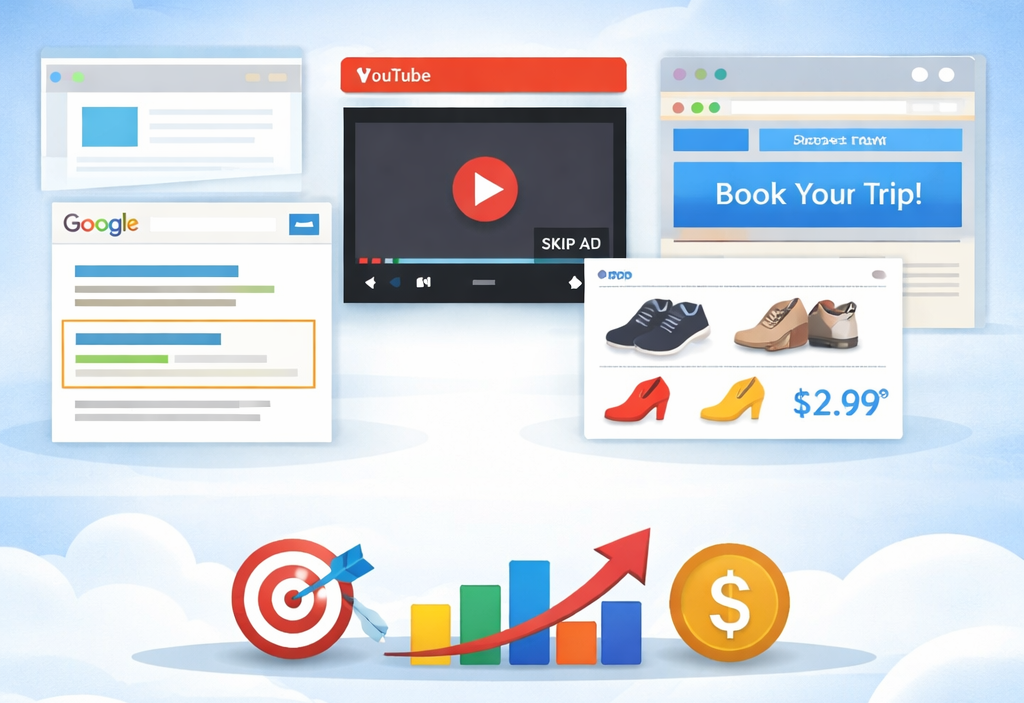
Anusha

bidding strategies in google ads​

Unlocking the Power of Bidding Strategies in Google Ads: Tips and Best Practices

In today’s competitive digital advertising landscape, bidding strategies in Google Ads are the backbone of successful campaigns. Whether you’re a small business owner or a digital marketing expert, understanding how to use bidding strategies in Google Ads effectively can make or break your advertising success. But what exactly are bidding strategies in Google Ads, and how can you leverage them to achieve your marketing goals? This guide will walk you through everything you need to know—from the basics to advanced techniques—so you can optimize your campaigns and maximize your return on investment (ROI). What Are Bidding Strategies in Google Ads? Bidding strategies in Google Ads are the methods used to determine how much you pay for each click, impression, or conversion in your advertising campaigns. Google Ads offers a variety of bidding strategies in Google Ads, each designed to help you achieve specific objectives, such as driving website traffic, generating leads, or increasing sales. Why Are Bidding Strategies Important? Types of Bidding Strategies in Google Ads Google Ads provides several bidding strategies in Google Ads, each tailored to different campaign goals. Let’s explore the most common ones: 1. Manual CPC (Cost-Per-Click) Bidding 2. Automated Bidding Strategies in Google Ads Automated bidding strategies in Google Ads use machine learning to optimize bids based on your campaign goals. Here are the most popular options: A. Maximize Clicks B. Target CPA (Cost-Per-Acquisition) C. Target ROAS (Return on Ad Spend) D. Maximize Conversions E. Enhanced CPC (Cost-Per-Click) How to Choose the Right Bidding Strategy Selecting the best bidding strategy in Google Ads depends on your campaign goals, budget, and available data. Here’s a step-by-step guide to help you decide: Step 1: Define Your Campaign Goals Step 2: Assess Your Budget Step 3: Evaluate Your Data Step 4: Monitor and Adjust Best Practices for Optimizing Bidding Strategies in Google Ads To get the most out of your bidding strategies in Google Ads, follow these best practices: 1. Start with Manual Bidding 2. Use Smart Bidding for Efficiency 3. Set Realistic Targets 4. Segment Your Campaigns 5. Monitor Competitor Activity 6. Optimize for Mobile 7. Test and Refine Common Mistakes to Avoid in Bidding Strategies in Google Ads Even experienced advertisers can make mistakes with bidding strategies in Google Ads. Here are some pitfalls to avoid: 1. Ignoring Conversion Tracking 2. Setting Unrealistic Targets 3. Not Using Negative Keywords 4. Overlooking Ad Scheduling 5. Failing to Review Performance Advanced Tips for Maximizing ROI with Bidding Strategies in Google Ads For advertisers looking to take their bidding strategies in Google Ads to the next level, consider these advanced tips: 1. Use Portfolio Bidding Strategies 2. Leverage Audience Signals 3. Implement Seasonal Adjustments 4. Combine Manual and Automated Bidding 5. Utilize Google’s Recommendations FAQs About Bidding Strategies in Google Ads 1. What is the best bidding strategy in Google Ads for beginners? For beginners, Maximize Clicks or Manual CPC are great starting points. They allow you to gather data and understand how bidding strategies in Google Ads work before moving to more advanced strategies. 2. How do I know if my bidding strategy in Google Ads is working? Monitor key metrics like click-through rate (CTR), conversion rate, and cost per conversion. If these metrics improve over time, your bidding strategy in Google Ads is likely effective. 3. Can I change my bidding strategy in Google Ads mid-campaign? Yes, you can change your bidding strategy in Google Ads at any time. However, it’s best to make changes gradually and monitor performance to avoid disruptions. 4. What is the difference between Target CPA and Target ROAS in Google Ads? Target CPA focuses on acquiring conversions at a specific cost, while Target ROAS optimizes for revenue based on your return on ad spend goal in your bidding strategies in Google Ads. 5. How often should I review my bidding strategy in Google Ads? Review your bidding strategy in Google Ads at least once a week. Regular monitoring ensures you can make timely adjustments based on performance data. Conclusion Mastering bidding strategies in Google Ads is essential for maximizing your advertising ROI. Whether you’re just starting or looking to refine your approach, understanding the different bidding strategies in Google Ads and best practices will help you achieve your campaign goals. Remember, the key to success lies in testing, monitoring, and optimizing your bids based on data. Start with a bidding strategy in Google Ads that aligns with your goals, gather insights, and refine your approach over time. CTA Ready to take your Google Ads campaigns to the next level? Start implementing these bidding strategies in Google Ads today and watch your ROI soar! Need help optimizing your campaigns? Contact Me for a free consultation. Let’s unlock the full potential of your advertising efforts together! Click Here!

Unlocking the Power of Bidding Strategies in Google Ads: Tips and Best Practices Read More »
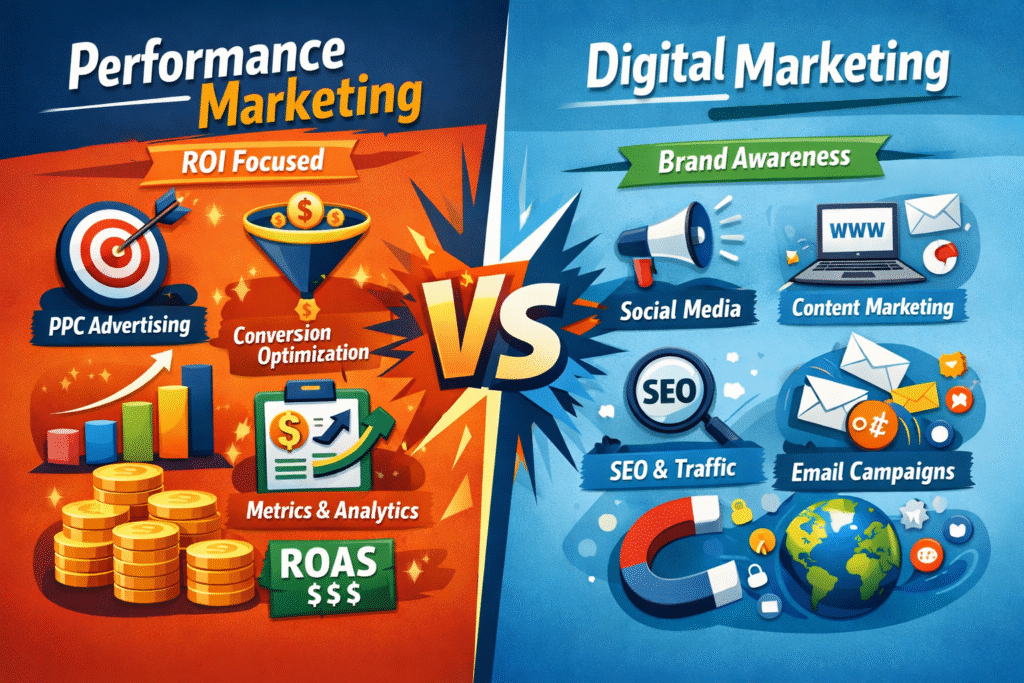
performance marketing vs digital marketing

Performance Marketing vs Digital Marketing: Choosing the Right Approach for Your Business

In today’s fast-paced digital world, businesses often struggle to decide between performance marketing and digital marketing. While both aim to boost online visibility and drive sales, they differ in approach, cost, and results. If you’re wondering which strategy aligns best with your business goals, this guide will help you understand the key differences between performance marketing vs digital marketing, their pros and cons, and how to choose the right one for your business. What is Digital Marketing? Digital marketing is an umbrella term for all online marketing efforts. It includes strategies like: Key Features of Digital Marketing ✅ Brand Awareness: Helps businesses build a strong online presence. ✅ Long-Term Growth: Focuses on sustainable customer relationships. ✅ Multi-Channel Approach: Uses various platforms (Google, Facebook, LinkedIn, etc.). ✅ Cost-Effective: Can be scaled based on budget. Example: A fashion brand using Instagram ads, SEO blog posts, and email newsletters to attract and retain customers. What is Performance Marketing? Performance marketing is a results-driven subset of digital marketing. Businesses only pay when a specific action is completed, such as: Key Features of Performance Marketing ✅ Pay-for-Results Model: No upfront costs; payment is tied to performance. ✅ Highly Measurable: Uses real-time analytics to track ROI. ✅ Low Risk: Ideal for startups and small businesses with limited budgets. ✅ Targeted Campaigns: Focuses on high-intent audiences. Example: An e-commerce store running Google Ads where they only pay when a user clicks and makes a purchase. Performance Marketing vs Digital Marketing: Key Differences 1. Primary Goal 2. Payment Model 3. Risk Level 4. Best Suited For 5. Measurement Metrics 6. Time to See Results 7. Flexibility Which is Better: Performance Marketing or Digital Marketing? Choose Digital Marketing If: ✔ You want to build brand authority and long-term customer loyalty. ✔ You have a larger budget and can invest in multiple channels. ✔ Your business focuses on content, storytelling, and engagement. Choose Performance Marketing If: ✔ You need immediate results with a limited budget. ✔ Your goal is direct sales, leads, or app installs. ✔ You prefer low-risk, high-reward campaigns. Best Approach? Use Both! Many successful businesses combine both strategies: Example: A SaaS company uses SEO and content marketing to attract leads and Google Ads (CPA model) to convert them into paying customers. Performance Marketing vs Digital Marketing: Which Gives Better ROI? Digital Marketing ROI Performance Marketing ROI Data Insight: According to a 2025 report by HubSpot, 63% of businesses using performance marketing saw a 30%+ increase in conversions within the first quarter. How to Choose the Right Strategy for Your Business? Step 1: Define Your Goals Step 2: Analyze Your Budget Step 3: Understand Your Audience Step 4: Test and Optimize FAQs About Performance Marketing vs Digital Marketing 1. Is performance marketing a part of digital marketing? Yes! Performance marketing is a subset of digital marketing that focuses on measurable results. 2. Which is more expensive: digital marketing or performance marketing? Digital marketing can be costly upfront (SEO, content creation), while performance marketing is pay-as-you-go. 3. Can small businesses benefit from performance marketing? Absolutely! Performance marketing is ideal for small businesses due to its low-risk, high-reward nature. 4. How long does it take to see results? 5. Should I hire an agency for performance marketing? If you lack expertise, hiring a performance marketing agency can help optimize campaigns for better ROI. Conclusion Choosing between performance marketing vs digital marketing depends on your business goals, budget, and timeline. Start by testing both strategies, track your results, and optimize for success. Which strategy are you leaning toward? Let me know in the comments!

Performance Marketing vs Digital Marketing: Choosing the Right Approach for Your Business Read More »

difference between digital marketing & social media marketing

Understanding the Difference Between Digital Marketing & Social Media Marketing: A Comprehensive Guide

In today’s digital-first world, businesses must leverage online strategies to connect with their audience. However, there’s often confusion about the difference between digital marketing & social media marketing. While both are crucial, they serve unique roles in a brand’s growth. Understanding these differences helps businesses craft more effective marketing strategies and allocate resources wisely. What Is Digital Marketing? Digital marketing is a broad term that includes all online marketing activities. It uses various digital channels to promote products, services, or brands. Key Components of Digital Marketing Digital marketing is a comprehensive strategy that integrates multiple channels to achieve business goals. What Is Social Media Marketing? Social media marketing (SMM) is a subset of digital marketing that focuses exclusively on social media platforms. It involves creating and sharing content on platforms like Facebook, Instagram, LinkedIn, Twitter, and TikTok to engage audiences and build brand awareness. Key Components of Social Media Marketing SMM is platform-specific and thrives on real-time interaction and engagement. Key Differences Between Digital Marketing & Social Media Marketing Scope Channels Used Primary Goal Content Types Measurement Metrics Why Both Are Essential for Business Growth While digital marketing provides a holistic approach to online promotion, social media marketing offers direct engagement with audiences. Here’s why businesses need both: How to Choose the Right Strategy for Your Business When to Focus on Digital Marketing When to Focus on Social Media Marketing FAQs 1. Is social media marketing the same as digital marketing? No, social media marketing is a part of digital marketing. Digital marketing includes all online marketing efforts, while social media marketing focuses only on social media platforms. 2. Which is more important: digital marketing or social media marketing? Both are important, but their relevance depends on your business goals. Digital marketing is essential for overall online visibility, while social media marketing is crucial for engagement and brand loyalty. 3. Can I succeed with only social media marketing? While social media marketing is powerful, relying solely on it may limit your reach. Combining it with other digital marketing strategies (like SEO and email marketing) ensures a balanced and effective approach. 4. How do I measure the success of digital marketing vs. social media marketing? 5. How can I integrate digital marketing & social media marketing? Conclusion The difference between digital marketing & social media marketing lies in their scope and objectives. Digital marketing is a comprehensive strategy, while social media marketing is a specialized tactic within it. Businesses that leverage both effectively can achieve higher visibility, engagement, and conversions. To succeed in 2026 and beyond, integrate both strategies—use digital marketing for broad reach and social media marketing for deeper connections. Call to Action Ready to optimize your marketing strategy? Start by auditing your current efforts and identifying gaps. Need help? Click Here!

Understanding the Difference Between Digital Marketing & Social Media Marketing: A Comprehensive Guide Read More »

search engine optimization vs pay per click​

Understanding the Differences: Search Engine Optimization vs. Pay Per Click Advertising

In the digital marketing landscape, two strategies dominate the conversation: Search Engine Optimization (SEO) and Pay Per Click (PPC) advertising. Both aim to drive traffic, generate leads, and increase conversions, but they operate in fundamentally different ways. If you’re a business owner, marketer, or entrepreneur, understanding the differences between search engine optimization vs pay per click is crucial. Should you invest in organic growth through SEO, or should you opt for immediate results with PPC? Or perhaps a combination of both? In this comprehensive guide, we’ll break down: By the end, you’ll have a clear understanding of search engine optimization vs pay per click and be able to make an informed decision for your marketing strategy. What is Search Engine Optimization (SEO)? Search Engine Optimization (SEO) is the process of optimizing your website and content to rank higher in organic (non-paid) search engine results. The goal is to attract free, targeted traffic from search engines like Google, Bing, and Yahoo. How SEO Works SEO involves three core components: When users search for keywords related to your business, SEO helps your website appear at the top of the Search Engine Results Pages (SERPs). Why SEO Matters Challenges of SEO What is Pay Per Click (PPC) Advertising? Pay Per Click (PPC) is a digital advertising model where advertisers pay a fee each time their ad is clicked. The most common PPC platform is Google Ads, but it also includes social media ads (Facebook, LinkedIn, Instagram) and display networks. How PPC Works Why PPC Matters Challenges of PPC Key Differences: Search Engine Optimization vs Pay Per Click Now that we’ve defined both, let’s compare search engine optimization vs pay per click across critical factors: 1. Cost Structure 2. Time to Results 3. Traffic Sustainability 4. Click-Through Rates (CTR) 5. Trust & Credibility 6. Targeting Options 7. Scalability Pros and Cons: SEO vs PPC SEO Pros ✅ Cost-effective long-term ✅ Builds brand authority ✅ Higher trust from users ✅ Sustainable traffic SEO Cons ❌ Slow results ❌ Requires ongoing effort ❌ Algorithm changes can hurt rankings PPC Pros ✅ Instant traffic & leads ✅ Precise audience targeting ✅ Measurable ROI ✅ Great for promotions & sales PPC Cons ❌ Expensive for competitive keywords ❌ Traffic stops when ads stop ❌ Requires constant optimization Which is Better: SEO or PPC? The answer depends on your business goals, budget, and timeline. Choose SEO If: ✔ You want long-term, sustainable traffic. ✔ You have a limited ad budget. ✔ You’re building brand authority. Choose PPC If: ✔ You need immediate results. ✔ You’re running a time-sensitive promotion. ✔ You have a high-converting offer. Best Approach: SEO + PPC Integration Most successful businesses use both SEO and PPC for a balanced strategy: How to Combine SEO and PPC for Maximum Impact 1. Use PPC Data to Inform SEO 2. Retarget Organic Visitors with PPC 3. Dominate SERPs with Both 4. Improve Landing Pages for Both FAQs: Search Engine Optimization vs Pay Per Click 1. Which is cheaper: SEO or PPC? SEO is cheaper in the long run because you don’t pay per click. However, PPC can be cost-effective if managed well, especially for high-intent commercial keywords. 2. Can I do SEO and PPC at the same time? Yes! Combining both maximizes visibility. Use PPC for quick results while building SEO for long-term growth. 3. How long does SEO take to work? SEO typically takes 3–12 months to show significant results, depending on competition and effort. 4. Is PPC better for e-commerce? PPC is excellent for e-commerce because it drives immediate sales. However, SEO helps build long-term organic traffic. 5. Does PPC affect SEO rankings? No, PPC does not directly impact SEO rankings. However, insights from PPC (like high-performing keywords) can improve SEO strategy. Conclusion: SEO vs PPC – Which Should You Choose? The debate between search engine optimization vs pay per click isn’t about which is better—it’s about which aligns with your business goals. By understanding the strengths and weaknesses of each, you can create a balanced digital marketing strategy that drives sustainable growth. Click Here for expert advice. What’s your experience with SEO and PPC? Have you tried combining both? Share your thoughts in the comments!

Understanding the Differences: Search Engine Optimization vs. Pay Per Click Advertising Read More »

campaign management in digital marketing

Mastering Campaign Management in Digital Marketing: Strategies for Success

Why Campaign Management in Digital Marketing Matters In today’s fast-paced digital landscape, campaign management in digital marketing is the backbone of successful online promotions. Whether you’re a startup, a small business, or a global brand, running well-structured campaigns can make or break your marketing efforts. But what exactly is campaign management in digital marketing? It’s the process of planning, executing, monitoring, and optimizing marketing campaigns across various digital channels—such as social media, email, search engines, and display ads—to achieve specific business goals. A well-managed campaign ensures: ✅ Higher engagement with your target audience ✅ Better ROI on marketing spend ✅ Improved brand visibility and customer loyalty ✅ Data-driven decision-making for future strategies In this guide, we’ll explore the key strategies, tools, and best practices to master campaign management in digital marketing and drive measurable results. 1. Understanding Campaign Management in Digital Marketing 1.1 What Is Campaign Management? Campaign management in digital marketing refers to the systematic approach of creating, executing, and analyzing marketing campaigns to achieve predefined objectives. These objectives could range from increasing website traffic and generating leads to boosting sales and enhancing brand awareness. A successful campaign involves: 1.2 Why Is Campaign Management Important? Without proper campaign management in digital marketing, businesses risk: Effective campaign management ensures that every dollar spent contributes to your business growth. 2. Key Components of Successful Campaign Management 2.1 Setting Clear Campaign Goals Before launching any campaign, define SMART goals (Specific, Measurable, Achievable, Relevant, Time-bound). Examples include: 2.2 Audience Segmentation & Targeting Not all customers are the same. Use demographic, psychographic, and behavioral data to segment your audience. Tools like Google Analytics, Facebook Audience Insights, and CRM software help refine targeting. 2.3 Choosing the Right Digital Marketing Channels Different channels serve different purposes: 2.4 Crafting Compelling Campaign Content Your ad copy, visuals, and messaging should: 2.5 Budget Allocation & Bidding Strategies Allocate budgets based on channel performance and audience behavior. Use automated bidding strategies (e.g., Google’s Smart Bidding) to maximize ROI. 2.6 Performance Tracking & Optimization Monitor KPIs like CTR, conversion rate, CPA, and ROAS. Use A/B testing to refine ads, landing pages, and CTAs. 3. Best Tools for Campaign Management in Digital Marketing 3.1 Google Ads & Google Analytics 3.2 Meta Ads Manager (Facebook & Instagram Ads) 3.3 HubSpot & Mailchimp (Email & Automation) 3.4 SEMrush & Ahrefs (SEO & Competitor Analysis) 3.5 Hootsuite & Buffer (Social Media Scheduling) 4. Common Mistakes in Campaign Management & How to Avoid Them 4.1 Ignoring Mobile Optimization 4.2 Not Testing Different Ad Variations 4.3 Overlooking Retargeting Strategies 4.4 Failing to Track Conversions Properly 4.5 Not Adapting to Market Trends 5. Future Trends in Campaign Management 5.1 AI & Machine Learning in Campaign Optimization 5.2 Personalization & Hyper-Targeting 5.3 Video & Interactive Content Dominance 5.4 Voice Search & Conversational Marketing 6. FAQs on Campaign Management in Digital Marketing Q1: What is the role of campaign management in digital marketing? A: Campaign management ensures that marketing efforts are strategically planned, executed, and optimized to meet business goals efficiently. Q2: How do I measure the success of a digital marketing campaign? A: Track KPIs like CTR, conversion rate, CPA, and ROAS using tools like Google Analytics and Meta Ads Manager. Q3: Which digital marketing channels are best for B2B campaigns? A: LinkedIn Ads, email marketing, and SEO work best for B2B lead generation. Q4: How often should I optimize my campaigns? A: Weekly reviews are ideal, but real-time adjustments (e.g., pausing underperforming ads) should be done as needed. Q5: Can small businesses benefit from campaign management? A: Absolutely! Even with a small budget, structured campaign management can maximize reach and conversions. Conclusion: Mastering Campaign Management for Long-Term Success Effective campaign management in digital marketing is not just about running ads—it’s about strategic planning, continuous optimization, and data-driven decision-making. By leveraging the right tools, avoiding common pitfalls, and staying ahead of trends, businesses can maximize their marketing ROI and achieve sustainable growth. Start implementing these strategies today, and watch your digital campaigns transform from good to exceptional! Click here! What’s your biggest challenge in campaign management? Share in the comments! 🚀

Mastering Campaign Management in Digital Marketing: Strategies for Success Read More »

Types of Search Engine Marketing

A Deep Dive into the Types of Search Engine Marketing: Which One is Right for You?

In today’s digital-first world, search engine marketing (SEM) is the backbone of online visibility. Whether you’re a startup, a small business, or an established enterprise, understanding the types of search engine marketing can make or break your digital success. But what exactly is SEM? How does it differ from SEO? And most importantly, which types of search engine marketing aligns with your business goals? In this comprehensive guide, we’ll explore: By the end, you’ll have a clear roadmap to leverage SEM effectively and drive measurable results. What is Search Engine Marketing (SEM)? Search engine marketing (SEM) is a digital marketing strategy aimed at increasing a website’s visibility on search engine results pages (SERPs) through paid and organic efforts. While SEO (Search Engine Optimization) focuses on organic rankings, SEM encompasses both paid advertising (PPC) and organic optimization. Why SEM Matters in 2026 Given these statistics, ignoring SEM means missing out on a massive audience. But not all types of search engine marketing are created equal. Let’s break them down. The Core Types of Search Engine Marketing 1. Search Engine Optimization (SEO) SEO is the foundation of SEM. It involves optimizing your website to rank higher in organic (non-paid) search results. How SEO Works Pros of SEO ✅ Long-term results – Once ranked, organic traffic is sustainable. ✅ Cost-effective – No direct cost per click (CPC). ✅ Builds credibility – Users trust organic results more than ads. Cons of SEO ❌ Time-consuming – Results take 3-6 months. ❌ Algorithm changes – Google updates can impact rankings. Best For: 2. Pay-Per-Click Advertising (PPC) PPC is a paid SEM strategy where advertisers pay each time a user clicks on their ad. The most popular platform is Google Ads, but Bing Ads and social media ads (Facebook, LinkedIn) also fall under PPC. How PPC Works Pros of PPC ✅ Instant visibility – Ads appear as soon as the campaign is live. ✅ Targeted reach – Ads can be tailored by location, demographics, and device. ✅ Measurable ROI – Track conversions, clicks, and impressions in real-time. Cons of PPC ❌ Costly – Competitive keywords can have high CPC. ❌ Requires expertise – Poorly managed campaigns waste budget. Best For: 3. Local Search Engine Marketing Local SEM focuses on optimizing for geo-specific searches, helping businesses attract nearby customers. How Local SEM Works Pros of Local SEM ✅ High conversion rates – Local searches often lead to in-store visits. ✅ Less competition – Easier to rank for niche local terms. ✅ Mobile-friendly – 46% of all Google searches are local (Think with Google). Cons of Local SEM ❌ Limited reach – Only targets users in a specific area. ❌ Requires consistent updates – Business details must stay current. Best For: 4. Shopping Ads (Google Shopping) Shopping Ads are product-based ads that appear in Google’s Shopping tab. They display product images, prices, and store names. How Shopping Ads Work Pros of Shopping Ads ✅ Visual appeal – Images attract more clicks than text ads. ✅ High purchase intent – Users are ready to buy. ✅ Competitive edge – Stand out in product searches. Cons of Shopping Ads ❌ Complex setup – Requires Merchant Center and feed management. ❌ Costly for competitive products – Bidding wars can drive up CPC. Best For: 5. Display Advertising Display Ads are visual banner ads shown on websites within the Google Display Network (GDN). How Display Ads Work Pros of Display Ads ✅ Brand awareness – Reaches a broad audience. ✅ Retargeting capabilities – Brings back past visitors. ✅ Creative flexibility – Use images, videos, and interactive ads. Cons of Display Ads ❌ Lower click-through rates (CTR) – Users often ignore banners. ❌ Less intent-driven – Users may not be actively searching for your product. Best For: 6. Video Advertising (YouTube Ads) Video Ads appear on YouTube and across the Google Display Network. How Video Ads Work Pros of Video Ads ✅ High engagement – Video content is more memorable. ✅ Targeted reach – Ads can be shown to specific demographics. ✅ YouTube’s massive audience – 2.5 billion monthly users. Cons of Video Ads ❌ Production costs – High-quality videos require investment. ❌ Ad fatigue – Users may skip or ignore repetitive ads. Best For: 7. Remarketing (Retargeting) Remarketing targets users who previously visited your website but didn’t convert. How Remarketing Works Pros of Remarketing ✅ Higher conversion rates – Targets warm leads. ✅ Cost-effective – Focuses on users already interested in your brand. ✅ Personalized messaging – Tailor ads based on user behavior. Cons of Remarketing ❌ Privacy concerns – Users may find it intrusive. ❌ Ad fatigue – Over-exposure can annoy users. Best For: How to Choose the Right Type of Search Engine Marketing With so many types of search engine marketing, how do you decide which one is right for your business? Here’s a step-by-step guide: 1. Define Your Goals 2. Analyze Your Budget 3. Understand Your Audience 4. Assess Your Resources 5. Test and Optimize Real-World Success Stories Case Study 1: E-Commerce Store Boosts Sales with Shopping Ads Business: Online fashion retailer Strategy: Google Shopping Ads + Remarketing Result: 300% increase in sales within 3 months. Case Study 2: Local Restaurant Dominates with Local SEM Business: Family-owned restaurant Strategy: Google My Business + Local SEO Result: 50% more foot traffic and a 4.8-star rating. Case Study 3: SaaS Company Scales with PPC Business: B2B software provider Strategy: Google Ads + LinkedIn PPC Result: 200% increase in demo sign-ups. Common SEM Mistakes to Avoid FAQs About Types of Search Engine Marketing 1. What is the difference between SEO and SEM? SEO focuses on organic rankings, while SEM includes both organic (SEO) and paid (PPC) strategies. 2. How much does PPC advertising cost? Costs vary by industry. Average CPC ranges from $1 to $50, depending on competition. 3. Can I do SEM without a website? No, SEM requires a landing page for ads and SEO. However, you can use Google My Business for local visibility. 4. How long does it take

A Deep Dive into the Types of Search Engine Marketing: Which One is Right for You? Read More »

Effective Digital Brand Guidelines

Essential Elements of Effective Digital Brand Guidelines for Your Business

In today’s fast-paced digital landscape, your brand’s identity is the cornerstone of your business’s success. Effective digital brand guidelines are not just a set of rules—they are the blueprint that ensures your brand remains consistent, recognizable, and resonant across every digital touchpoint. Whether you are a startup, a small business, or an established enterprise, having well-defined digital brand guidelines is crucial for building trust, enhancing visibility, and driving long-term growth. But what exactly makes digital brand guidelines effective? How can you create a framework that not only reflects your brand’s values but also engages your audience and converts leads into loyal customers? In this comprehensive guide, we will explore the 10 essential elements of effective digital brand guidelines and provide actionable insights to help you implement them seamlessly. Why Effective Digital Brand Guidelines Are Non-Negotiable Before diving into the elements, it’s important to understand why effective digital brand guidelines are a game-changer for your business: 10 Essential Elements of Effective Digital Brand Guidelines Creating effective digital brand guidelines requires careful planning and attention to detail. Below, we break down the 10 essential elements that every set of digital brand guidelines should include. 1. Brand Story and Mission: The Heart of Your Brand Your brand story and mission statement are the foundation of your digital brand guidelines. They define who you are, what you stand for, and why your business exists. A compelling brand story creates an emotional connection with your audience, while a clear mission statement provides direction and purpose. How to Define Your Brand Story and Mission Example of a Strong Brand Story “At [Your Brand], we started with a simple idea: to make digital branding accessible to small businesses. Our journey began in a small home office, where we struggled to find affordable and effective branding tools. Today, we empower thousands of entrepreneurs to build their dream businesses with confidence. Our mission is to simplify branding so you can focus on what you do best—growing your business.” 2. Brand Voice and Tone: Speak to Your Audience Your brand voice is the personality of your business, while your tone is how that personality adapts to different situations. Together, they shape how your audience perceives your brand. Effective digital brand guidelines must define your brand voice and tone to ensure brand consistency across all communications. How to Define Your Brand Voice and Tone Example of Brand Voice and Tone Guidelines 3. Logo Usage: The Face of Your Brand Your logo is the most recognizable element of your brand identity. Effective digital brand guidelines must include clear rules for logo usage to ensure brand consistency across all platforms. How to Define Logo Usage Guidelines Example of Logo Usage Guidelines “The primary logo should be used for all official communications, including website headers, business cards, and marketing materials. The secondary logo (icon-only) should be used for social media profile pictures and favicons. Always ensure there is adequate clear space around the logo to maintain visibility and impact.” 4. Color Palette: The Emotional Connection Colors play a powerful role in shaping your brand identity. They evoke emotions, influence perceptions, and create a visual connection with your audience. Effective digital brand guidelines must include a well-defined color palette to ensure brand consistency across all platforms. How to Define Your Color Palette Example of a Color Palette 5. Typography: The Art of Readability Typography is a critical component of your brand identity. The fonts you choose can convey professionalism, creativity, or playfulness. Effective digital brand guidelines must include clear typography rules to ensure brand consistency and readability. How to Define Typography Guidelines Example of Typography Guidelines “For headings, use Montserrat Bold in sizes ranging from 24px to 36px. For body text, use Open Sans Regular in 16px with a line height of 1.5. For quotes or testimonials, use Playfair Display Italic in 20px. Always ensure your typography is legible and accessible.” 6. Imagery and Visual Style: Tell Your Story Visually Images and visuals are powerful tools for storytelling. They can evoke emotions, convey messages, and enhance your brand identity. Effective digital brand guidelines must include clear rules for imagery and visual style to ensure brand consistency. How to Define Imagery and Visual Style Guidelines Example of Imagery Guidelines “Our brand uses bright and airy photography with natural lighting to convey a sense of optimism and approachability. For social media, use candid shots of people interacting with our products. Avoid using dark or moody images, as they do not align with our brand’s personality.” 7. Digital Platform-Specific Guidelines: Tailor Your Approach Different digital platforms have unique requirements and audiences. Effective digital brand guidelines must include platform-specific rules to ensure brand consistency across all channels. How to Define Platform-Specific Guidelines Example of Platform-Specific Guidelines “For Instagram posts, use a 4:5 aspect ratio with a consistent filter (e.g., Valencia). Captions should be concise and engaging, with 1–2 relevant hashtags. For email marketing, use a professional tone and include a clear call-to-action button in the primary blue color.” 8. Brand Messaging: Communicate with Clarity Your brand messaging is the language you use to communicate with your audience. It includes your taglines, value propositions, and key messages. Effective digital brand guidelines must define your brand messaging to ensure brand consistency and clarity. How to Define Brand Messaging Guidelines Example of Brand Messaging “Our tagline, ‘Empowering Your Digital Journey,’ reflects our commitment to helping small businesses thrive in the digital landscape. Our value proposition, ‘We simplify branding for small businesses,’ communicates our mission to make branding easy and accessible.” 9. Accessibility: Inclusivity Matters Accessibility is a critical component of effective digital brand guidelines. Ensuring your brand is accessible to all users, including those with disabilities, is not only a legal requirement but also a moral obligation. How to Define Accessibility Guidelines Example of Accessibility Guidelines “All images must include descriptive alt text to ensure accessibility for screen readers. For example, ‘A team of professionals collaborating in a bright office space.’ Ensure all text has a contrast ratio of at least

Essential Elements of Effective Digital Brand Guidelines for Your Business Read More »

Navigating the Digital Landscape: Building a Robust Social Media Marketing Strategy

In today’s fast-paced digital world, a well-crafted social media marketing strategy is no longer optional—it’s essential. Businesses that fail to leverage social media risk falling behind competitors, missing out on leads, and losing customer engagement. But how do you create a social media marketing strategy that delivers real results? This guide will walk you through the key steps to building a powerful social media marketing strategy, from setting goals to analyzing performance. Whether you’re a startup or an established brand, these insights will help you dominate the digital landscape in 2025 and beyond. Why a Social Media Marketing Strategy Matters A social media marketing strategy is more than just posting content—it’s a data-driven plan that aligns with your business goals. Without a strategy, your efforts may lack direction, wasting time and resources. Key Benefits of a Strong Social Media Marketing Strategy ✅ Increased Brand Awareness – Reach millions of potential customers. ✅ Higher Engagement Rates – Build a loyal community. ✅ Better Lead Generation – Convert followers into paying customers. ✅ Improved Customer Insights – Understand audience preferences. ✅ Cost-Effective Marketing – Lower ad costs compared to traditional media. Step 1: Define Your Goals for a Winning Social Media Marketing Strategy Before diving into content creation, ask: SMART Goals for Your Social Media Marketing Strategy Instead of vague objectives, set SMART goals: Examples of SMART Goals: Step 2: Identify Your Target Audience A social media marketing strategy fails without knowing your audience. Use analytics tools like: Key Details to Identify: How to Create Buyer Personas Step 3: Choose the Right Social Media Platforms Not all platforms work for every business. Here’s a quick guide to selecting the best ones for your social media marketing strategy: Facebook Instagram LinkedIn TikTok Twitter (X) Pinterest Step 4: Optimize Your Social Media Profiles A strong social media marketing strategy starts with optimized profiles. Ensure the following: ✔ Consistent Branding – Use the same logo, colors, and tone across platforms. ✔ Keyword-Rich Descriptions – Include social media marketing strategy in your bio. ✔ Clear CTAs (Call-to-Actions) – Direct users to visit your website, DM for inquiries, or sign up. ✔ Link to Website & Other Platforms – Make it easy for users to find you everywhere. Step 5: Create Engaging Content for Your Social Media Marketing Strategy Content is king in social media marketing. Follow the 80-20 rule: Types of High-Performing Content Step 6: Leverage Paid Advertising in Your Social Media Marketing Strategy Organic reach is declining. Paid ads help amplify your social media marketing strategy. Platforms like Facebook Ads, Instagram Ads, and LinkedIn Ads offer: Ad Types to Consider Step 7: Monitor & Analyze Performance A data-driven social media marketing strategy requires constant optimization. Track these key metrics: Best Analytics Tools Step 8: Stay Updated with Social Media Trends The digital landscape evolves rapidly. To keep your social media marketing strategy effective: ✔ Follow Industry Leaders – HubSpot, Neil Patel, Social Media Examiner. ✔ Experiment with New Features – Instagram Reels, LinkedIn Audio Events, TikTok Shop. ✔ Adapt to Algorithm Changes – Stay updated with Facebook, Instagram, and TikTok updates. 5 FAQs About Social Media Marketing Strategy 1. What is the most important part of a social media marketing strategy? The most critical element is defining clear goals and understanding your audience. Without these, your strategy lacks direction and effectiveness. 2. How often should I post on social media? 3. How do I increase engagement in my social media marketing strategy? 4. Should I use influencers in my social media marketing strategy? Yes! Influencers help expand reach and build trust. Consider micro-influencers (10K-100K followers) for higher engagement rates and authentic connections. 5. How do I measure ROI in social media marketing? Track: Final Thoughts: Master Your Social Media Marketing Strategy A well-executed social media marketing strategy can transform your business. By setting goals, understanding your audience, creating engaging content, and analyzing performance, you’ll dominate the digital landscape in 2026. Ready to elevate your social media game? Click Here! Start implementing these strategies today and watch your brand grow!

Navigating the Digital Landscape: Building a Robust Social Media Marketing Strategy Read More »

social media marketing agency for small businesses

Unlocking Success: Why Small Businesses Need a Social Media Marketing Agency

In today’s digital-first world, small businesses face fierce competition. Standing out requires more than just a great product or service—it demands a strong online presence. This is where a social media marketing agency for small businesses becomes invaluable. Whether you’re a startup or an established local brand, leveraging social media effectively can unlock unprecedented growth, customer engagement, and revenue. But why should small businesses invest in a social media marketing agency? The answer lies in expertise, efficiency, and results. Social media platforms like Facebook, Instagram, LinkedIn, and TikTok are constantly evolving, and keeping up with trends, algorithms, and best practices can be overwhelming. A specialized agency brings the skills, tools, and strategies needed to maximize your reach and conversions. The Power of Social Media for Small Businesses 1. Expanding Your Reach Social media platforms have billions of active users. For small businesses, this means access to a global audience without the need for a massive advertising budget. A social media marketing agency for small businesses can help you: 2. Building Brand Awareness Consistency is key to brand recognition. A social media marketing agency ensures your brand’s voice, visuals, and messaging remain cohesive across all platforms. This builds trust and familiarity with your audience, making them more likely to choose your business over competitors. 3. Driving Website Traffic and Sales Social media isn’t just about likes and shares—it’s a powerful tool for driving traffic to your website and converting followers into customers. Agencies use strategies like: 4. Engaging with Customers Social media allows for real-time interaction with your audience. A social media marketing agency for small businesses can help you: Why DIY Social Media Marketing Falls Short Many small business owners attempt to manage their social media in-house, but this approach often leads to: A social media marketing agency for small businesses eliminates these challenges by providing a structured, data-driven approach. Top Benefits of Hiring a Social Media Marketing Agency 1. Expertise and Experience Agencies specialize in social media marketing, bringing years of experience and industry knowledge. They understand: 2. Time and Resource Savings Managing social media is time-consuming. By outsourcing to a social media marketing agency for small businesses, you free up time to focus on core operations like product development and customer service. 3. Access to Advanced Tools Agencies use premium tools for: 4. Scalability As your business grows, your social media needs will evolve. An agency can scale campaigns, adjust strategies, and explore new platforms to keep your brand ahead of the curve. 5. Measurable Results A social media marketing agency provides detailed reports on: How to Choose the Right Social Media Marketing Agency 1. Define Your Goals Before hiring an agency, clarify what you want to achieve: 2. Research and Compare Agencies Look for agencies with: 3. Ask the Right Questions 4. Start with a Trial Period Many agencies offer trial periods or pilot campaigns. Use this time to assess their performance and compatibility with your business. Success Stories: Small Businesses That Thrived with Social Media Agencies Case Study 1: Local Bakery Boosts Sales by 200% A small bakery in Mumbai struggled with low foot traffic. After hiring a social media marketing agency for small businesses, they: Case Study 2: E-commerce Store Grows Followers by 500% An online fashion store partnered with an agency to: Conclusion: Invest in Your Growth with a Social Media Marketing Agency In a competitive digital landscape, small businesses cannot afford to overlook the power of social media. A social media marketing agency for small businesses brings expertise, efficiency, and measurable results, allowing you to focus on what you do best—running your business. If you’re ready to unlock success, start by researching agencies that align with your goals. The right partnership can transform your online presence, drive sales, and position your brand for long-term growth. Final Thoughts Social media is no longer optional—it’s a necessity. By investing in a social media marketing agency for small businesses, you’re not just posting content; you’re building a community, fostering loyalty, and driving revenue. Ready to take your social media strategy to the next level? Reach out! FAQs 1. What does a social media marketing agency for small businesses do? A social media marketing agency for small businesses specializes in creating, managing, and optimizing social media campaigns tailored to your brand’s goals. They handle content creation, posting schedules, audience engagement, paid advertising, and performance analytics to help you grow your online presence and drive sales. 2. How much does it cost to hire a social media marketing agency for small businesses? Costs vary depending on the scope of services, agency experience, and your business needs. Typically, small businesses can expect to invest between $500 to $5,000 per month for comprehensive social media management. Many agencies offer customizable packages to fit different budgets. 3. Can a social media marketing agency help my small business if I have a limited budget? Absolutely! Many social media marketing agencies for small businesses offer scalable solutions, including starter packages focused on organic growth or targeted ads with smaller budgets. Agencies can also help you prioritize high-impact strategies to maximize your ROI. 4. How long does it take to see results from a social media marketing agency? Results depend on your goals and the strategies implemented. Typically, you may start seeing increased engagement within 1–3 months, while significant growth in followers, website traffic, or sales may take 3–6 months. Paid advertising can yield faster results, often within weeks. 5. Which social media platforms should my small business focus on? The best platforms depend on your target audience and industry. A social media marketing agency for small businesses can help you identify the right mix, but here’s a quick guide: 6. How do I measure the success of my social media marketing efforts? A professional agency will track key performance indicators (KPIs) such as: 7. Can I manage my social media myself instead of hiring an agency? While it’s possible to manage your own social media, it requires significant time, expertise, and consistency.

Unlocking Success: Why Small Businesses Need a Social Media Marketing Agency Read More »

Why Your Content Marketing Isn’t Working — 7 Shocking Reasons and How to Fix It Fast

The Hard Truth About Failing Content Marketing You’re publishing blog posts, sharing on social media, and sending newsletters—but your content marketing just isn’t delivering. Traffic is flat, engagement is low, and conversions are almost nonexistent. If this sounds familiar, you’re not alone. 60% of marketers struggle to see real ROI from content marketing. The good news? Most failures are fixable. In this guide, you’ll learn: Let’s cut through the noise and get your content marketing back on track. How to Know If Your Content Marketing Is Failing Before you can fix your content marketing, recognize the red flags: Low or Declining Traffic If your blog or website traffic is flat or dropping, your content isn’t reaching your audience. High Bounce Rates Visitors leave quickly? Your content isn’t engaging or relevant to their needs. Poor Conversion Rates Lots of readers but no leads or sales? Your content isn’t driving action. Weak Social Shares & Backlinks If no one is sharing or linking to your content, it’s not valuable or visible enough. No Clear ROI If you can’t tie your content marketing to revenue or business growth, it’s time for a change. 7 Shocking Reasons Your Content Marketing Isn’t Working Reason 1: You’re Not Solving Real Problems Most content fails because it’s self-centered, not customer-centered. If your content doesn’t answer real questions or solve real pain points, it won’t resonate. Fix: Use tools like AnswerThePublic, Google’s “People Also Ask,” and Reddit to find what your audience is searching for. Reason 2: Your Content Lacks Originality Regurgitating the same ideas as everyone else? Google and readers reward uniqueness. Fix: Add original research, case studies, or fresh perspectives to stand out. Reason 3: You’re Ignoring SEO Best Practices If your content isn’t optimized for search, it’s invisible. Keyword stuffing is out; intent-based, high-quality SEO is in. Fix: Use long-tail keywords, optimize meta tags, and build internal links. Reason 4: Your Content Is Too Salesy People don’t want ads—they want value. If every post is a pitch, you’ll lose trust. Fix: Follow the 80/20 rule: 80% value, 20% promotion. Reason 5: You’re Not Promoting Your Content “If you build it, they will come” doesn’t work. Even the best content needs promotion. Fix: Share on social media, email newsletters, and collaborate with influencers. Reason 6: Your Content Isn’t Optimized for Readability Walls of text, jargon, and poor formatting scare readers away. Fix: Use short paragraphs, bullet points, and visuals to improve readability. Reason 7: You’re Not Measuring or Iterating If you’re not tracking performance, you can’t improve. Fix: Use Google Analytics, heatmaps, and A/B testing to refine your strategy. Real Examples: Brands That Fixed Their Content Marketing HubSpot – From Blog to Industry Leader HubSpot’s inbound marketing blog became a traffic powerhouse by focusing on educational, problem-solving content. Buffer – Transparency as a Strategy Buffer’s open culture and data-driven posts built trust and increased shares by 300%. Airbnb – Storytelling Over Selling Airbnb’s user-generated stories and local guides made their content shareable and authentic. Step-by-Step: How to Fix Your Content Marketing Strategy Step 1: Audit Your Existing Content Step 2: Define Clear Goals Step 3: Create a Content Calendar Step 4: Optimize for SEO & Readability Step 5: Promote Aggressively Step 6: Engage with Your Audience Step 7: Measure, Learn, and Improve Common Mistakes to Avoid in 2025 Future-Proofing Your Content Marketing Embrace AI & Automation Use AI for content ideas, personalization, and chatbots to enhance user experience. Focus on Interactive Content Quizzes, polls, and interactive infographics boost engagement. Prioritize Voice Search Optimization With smart speakers on the rise, optimize for natural language queries. Build a Strong Community Foster loyalty and advocacy through exclusive content and engagement. Conclusion: Your Content Marketing Revival Starts Now If your content marketing isn’t working, it’s not because content is dead—it’s because your strategy needs a refresh. By solving real problems, optimizing for SEO, promoting aggressively, and measuring results, you can transform your content marketing from a cost center to a revenue driver. Start today: Audit your content, set clear goals, and commit to consistent improvement. To get in touch with us, Click Here. Final Thoughts Content marketing is a long-term game, but with the right fixes, you’ll see real results faster than you think. What’s the biggest challenge you face with content marketing? Share in the comments!

Why Your Content Marketing Isn’t Working — 7 Shocking Reasons and How to Fix It Fast Read More »