
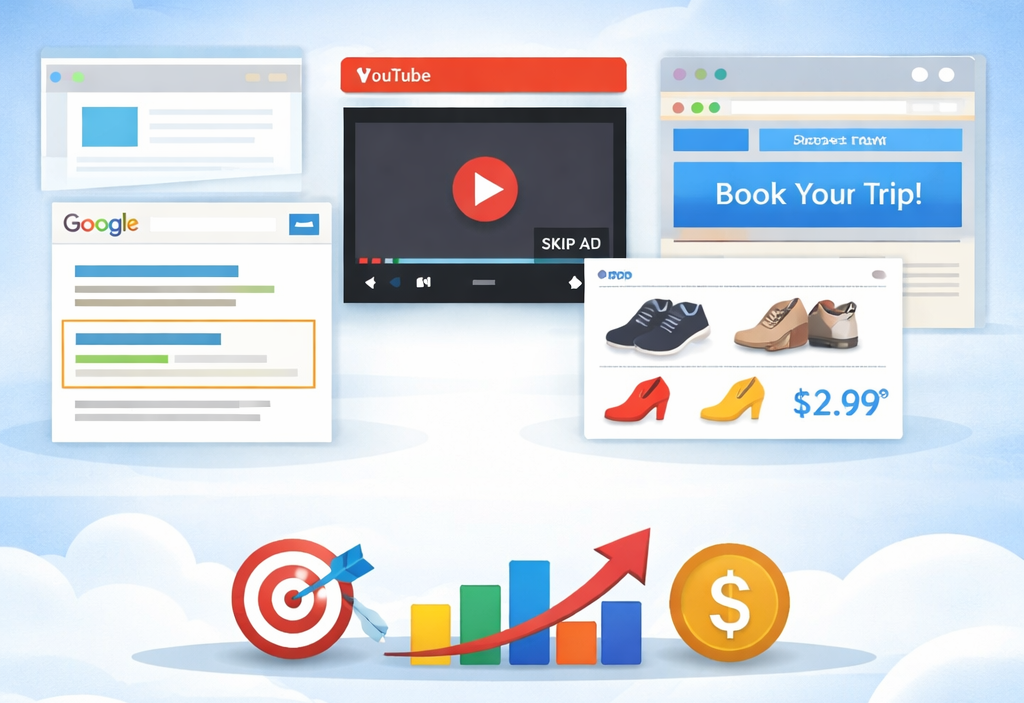
In today’s competitive digital advertising landscape, bidding strategies in Google Ads are the backbone of successful campaigns. Whether you’re a small business owner or a digital marketing expert, understanding how to use bidding strategies in Google Ads effectively can make or break your advertising success.
But what exactly are bidding strategies in Google Ads, and how can you leverage them to achieve your marketing goals? This guide will walk you through everything you need to know—from the basics to advanced techniques—so you can optimize your campaigns and maximize your return on investment (ROI).
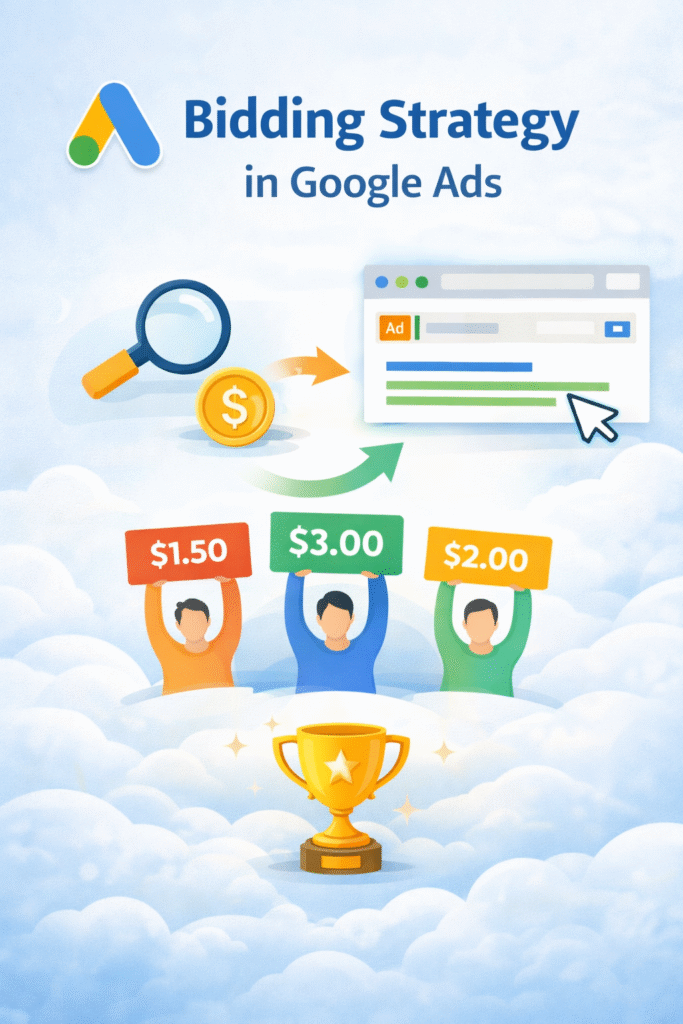
What Are Bidding Strategies in Google Ads?
Bidding strategies in Google Ads are the methods used to determine how much you pay for each click, impression, or conversion in your advertising campaigns. Google Ads offers a variety of bidding strategies in Google Ads, each designed to help you achieve specific objectives, such as driving website traffic, generating leads, or increasing sales.
Why Are Bidding Strategies Important?
- Maximize ROI: Efficient bidding strategies in Google Ads ensure you get the best value for your ad spend.
- Reach the Right Audience: Smart bidding strategies in Google Ads help target users who are most likely to convert.
- Save Time: Automated bidding strategies in Google Ads reduce the need for constant manual adjustments.
- Improve Campaign Performance: The right bidding strategy in Google Ads aligns with your business goals, leading to better results.
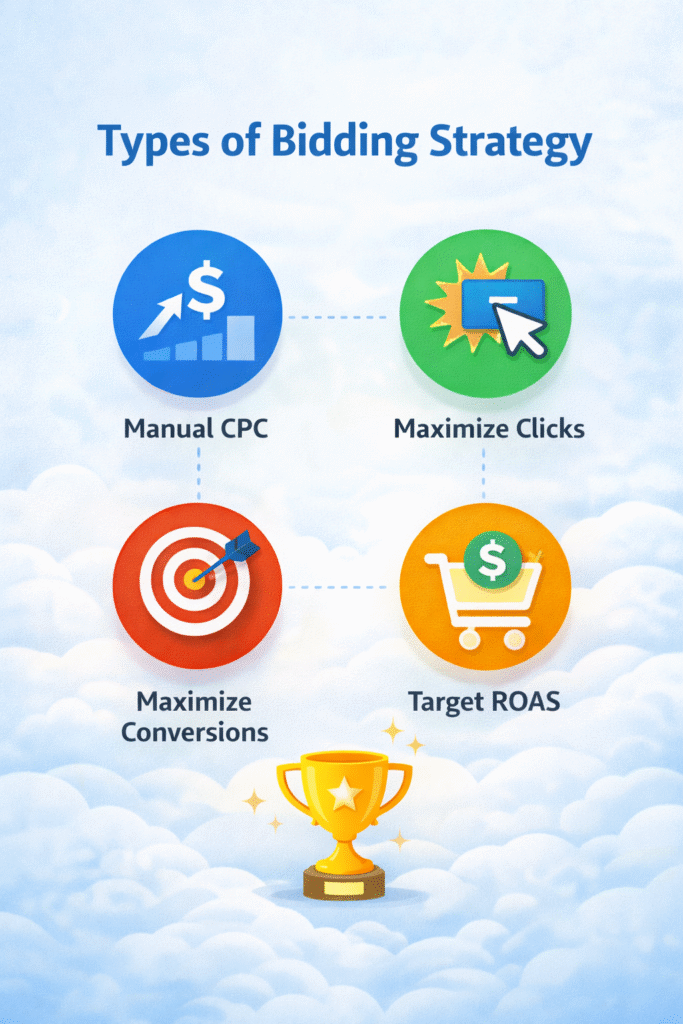
Types of Bidding Strategies in Google Ads
Google Ads provides several bidding strategies in Google Ads, each tailored to different campaign goals. Let’s explore the most common ones:
1. Manual CPC (Cost-Per-Click) Bidding
- What it is: You manually set the maximum amount you’re willing to pay for each click.
- Best for: Advertisers who want full control over their bidding strategies in Google Ads.
- Pros:
- Complete control over bid amounts.
- Ideal for testing and optimizing campaigns.
- Cons:
- Time-consuming to manage.
- Requires constant monitoring.
2. Automated Bidding Strategies in Google Ads
Automated bidding strategies in Google Ads use machine learning to optimize bids based on your campaign goals. Here are the most popular options:
A. Maximize Clicks
- What it is: Google automatically sets bids to get as many clicks as possible within your budget.
- Best for: Driving traffic to your website using bidding strategies in Google Ads.
- Pros:
- Easy to set up.
- Great for brand awareness.
- Cons:
- May not focus on conversions.
B. Target CPA (Cost-Per-Acquisition)
- What it is: Google sets bids to get as many conversions as possible at your target cost per acquisition.
- Best for: Lead generation and sales-focused campaigns using bidding strategies in Google Ads.
- Pros:
- Optimizes for conversions.
- Reduces manual work.
- Cons:
- Requires sufficient conversion data.
C. Target ROAS (Return on Ad Spend)
- What it is: Google sets bids to maximize conversion value based on your target return on ad spend.
- Best for: E-commerce and revenue-driven campaigns using bidding strategies in Google Ads.
- Pros:
- Focuses on revenue generation.
- Ideal for high-value products.
- Cons:
- Needs historical conversion data.
D. Maximize Conversions
- What it is: Google automatically sets bids to get the most conversions within your budget.
- Best for: Campaigns focused on lead generation or sales using bidding strategies in Google Ads.
- Pros:
- Simple and effective.
- Works well with limited data.
- Cons:
- May not consider conversion value.
E. Enhanced CPC (Cost-Per-Click)
- What it is: Adjusts manual bids to increase the likelihood of conversions.
- Best for: Advertisers who want a mix of control and automation in their bidding strategies in Google Ads.
- Pros:
- Balances manual and automated bidding.
- Improves conversion rates.
- Cons:
- Requires some manual input.
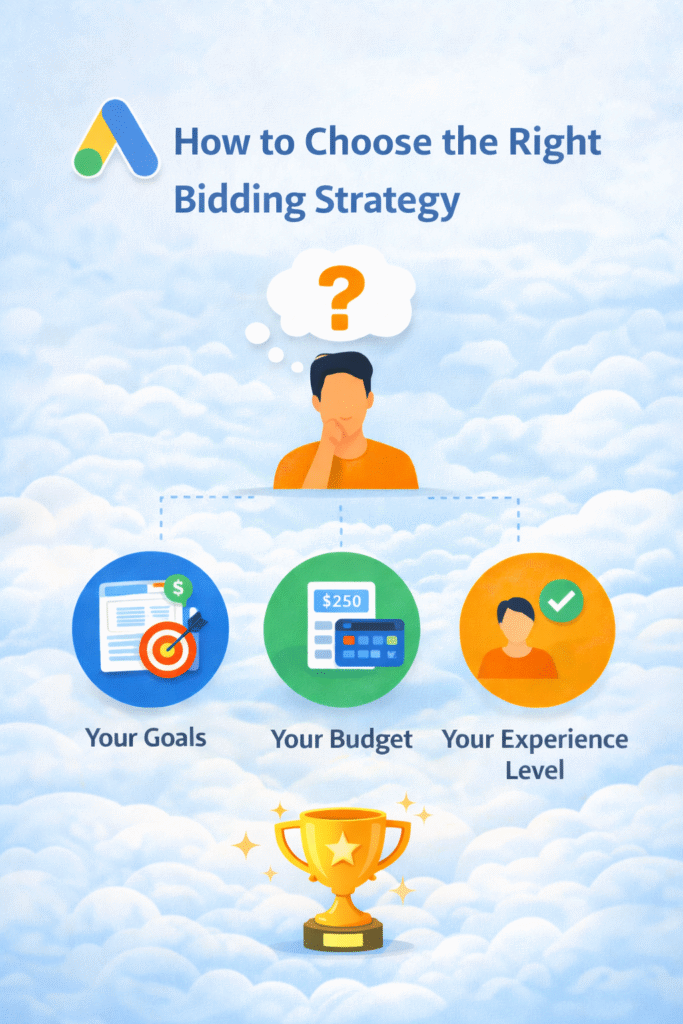
How to Choose the Right Bidding Strategy
Selecting the best bidding strategy in Google Ads depends on your campaign goals, budget, and available data. Here’s a step-by-step guide to help you decide:
Step 1: Define Your Campaign Goals
- Brand Awareness: Use Maximize Clicks or Manual CPC in your bidding strategies in Google Ads.
- Lead Generation: Opt for Target CPA or Maximize Conversions in your bidding strategies in Google Ads.
- Sales and Revenue: Choose Target ROAS or Enhanced CPC in your bidding strategies in Google Ads.
Step 2: Assess Your Budget
- Small Budget: Start with Maximize Clicks or Manual CPC to gather data for your bidding strategies in Google Ads.
- Large Budget: Use Target CPA or Target ROAS for better optimization in your bidding strategies in Google Ads.
Step 3: Evaluate Your Data
- Limited Data: Begin with Maximize Conversions or Enhanced CPC in your bidding strategies in Google Ads.
- Sufficient Data: Switch to Target CPA or Target ROAS for better results in your bidding strategies in Google Ads.
Step 4: Monitor and Adjust
- Regularly review performance metrics for your bidding strategies in Google Ads.
- Adjust bids based on conversion rates and ROI.
- Test different strategies to find what works best for your bidding strategies in Google Ads.
Best Practices for Optimizing Bidding Strategies in Google Ads
To get the most out of your bidding strategies in Google Ads, follow these best practices:
1. Start with Manual Bidding
- Gain a deeper understanding of your campaign performance.
- Identify high-performing keywords and adjust bids accordingly in your bidding strategies in Google Ads.
2. Use Smart Bidding for Efficiency
- Leverage Target CPA or Target ROAS for automated optimization in your bidding strategies in Google Ads.
- Ensure you have enough conversion data for accurate bidding.
3. Set Realistic Targets
- Avoid setting overly aggressive CPA or ROAS targets in your bidding strategies in Google Ads.
- Gradually adjust targets based on performance data.
4. Segment Your Campaigns
- Create separate campaigns for different goals (e.g., brand awareness vs. sales).
- Use different bidding strategies in Google Ads for each segment.
5. Monitor Competitor Activity
- Use tools like Google Auction Insights to track competitor bids.
- Adjust your bids to stay competitive in your bidding strategies in Google Ads.
6. Optimize for Mobile
- Mobile users often have different behaviors than desktop users.
- Adjust bids for mobile devices to maximize conversions in your bidding strategies in Google Ads.
7. Test and Refine
- Run A/B tests with different bidding strategies in Google Ads.
- Analyze results and refine your approach.

Common Mistakes to Avoid in Bidding Strategies in Google Ads
Even experienced advertisers can make mistakes with bidding strategies in Google Ads. Here are some pitfalls to avoid:
1. Ignoring Conversion Tracking
- Without proper tracking, automated bidding strategies in Google Ads won’t work effectively.
- Ensure conversion tracking is set up correctly.
2. Setting Unrealistic Targets
- Unrealistic CPA or ROAS targets can limit your campaign’s reach.
- Start with achievable goals and adjust gradually in your bidding strategies in Google Ads.
3. Not Using Negative Keywords
- Negative keywords prevent your ads from showing for irrelevant searches.
- Regularly update your negative keyword list to improve efficiency in your bidding strategies in Google Ads.
4. Overlooking Ad Scheduling
- Bid adjustments based on time of day or day of the week can improve performance.
- Analyze when your audience is most active and adjust bids accordingly in your bidding strategies in Google Ads.
5. Failing to Review Performance
- Regularly review your campaign metrics for your bidding strategies in Google Ads.
- Make data-driven adjustments to optimize bids.

Advanced Tips for Maximizing ROI with Bidding Strategies in Google Ads
For advertisers looking to take their bidding strategies in Google Ads to the next level, consider these advanced tips:
1. Use Portfolio Bidding Strategies
- Apply a single bidding strategy across multiple campaigns.
- Ideal for managing large accounts with similar goals in your bidding strategies in Google Ads.
2. Leverage Audience Signals
- Use audience data to inform your bidding strategies in Google Ads.
- Target high-value users with higher bids.
3. Implement Seasonal Adjustments
- Adjust bids during peak seasons or promotions.
- Use historical data to predict trends and optimize bids in your bidding strategies in Google Ads.
4. Combine Manual and Automated Bidding
- Use Enhanced CPC for a balance of control and automation in your bidding strategies in Google Ads.
- Manually adjust bids for high-priority keywords.
5. Utilize Google’s Recommendations
- Google Ads provides personalized recommendations for bidding.
- Review and implement relevant suggestions to improve performance in your bidding strategies in Google Ads.
FAQs About Bidding Strategies in Google Ads
1. What is the best bidding strategy in Google Ads for beginners?
For beginners, Maximize Clicks or Manual CPC are great starting points. They allow you to gather data and understand how bidding strategies in Google Ads work before moving to more advanced strategies.
2. How do I know if my bidding strategy in Google Ads is working?
Monitor key metrics like click-through rate (CTR), conversion rate, and cost per conversion. If these metrics improve over time, your bidding strategy in Google Ads is likely effective.
3. Can I change my bidding strategy in Google Ads mid-campaign?
Yes, you can change your bidding strategy in Google Ads at any time. However, it’s best to make changes gradually and monitor performance to avoid disruptions.
4. What is the difference between Target CPA and Target ROAS in Google Ads?
Target CPA focuses on acquiring conversions at a specific cost, while Target ROAS optimizes for revenue based on your return on ad spend goal in your bidding strategies in Google Ads.
5. How often should I review my bidding strategy in Google Ads?
Review your bidding strategy in Google Ads at least once a week. Regular monitoring ensures you can make timely adjustments based on performance data.
Conclusion
Mastering bidding strategies in Google Ads is essential for maximizing your advertising ROI. Whether you’re just starting or looking to refine your approach, understanding the different bidding strategies in Google Ads and best practices will help you achieve your campaign goals.
Remember, the key to success lies in testing, monitoring, and optimizing your bids based on data. Start with a bidding strategy in Google Ads that aligns with your goals, gather insights, and refine your approach over time.
CTA
Ready to take your Google Ads campaigns to the next level? Start implementing these bidding strategies in Google Ads today and watch your ROI soar!
Need help optimizing your campaigns? Contact Me for a free consultation. Let’s unlock the full potential of your advertising efforts together!